
Why shaving a double coat backfires
A double coat has two layers: a coarse outer layer that repels water and sun, and a soft undercoat that traps air. That trapped air is insulation, and insulation works both ways. It keeps cold out in January and it keeps heat off the skin in August.
When that system is shaved off, three things tend to happen. The dog loses sun protection and can burn. The coat may grow back patchy or with a different texture, something groomers call coat funk or post clipping alopecia. And the dog often feels hotter, not cooler, because the skin is now exposed to direct sun.
Which coats do benefit from a summer trim
- Poodles and doodles: hair keeps growing, so a shorter clip in August is comfortable and cuts matting risk.
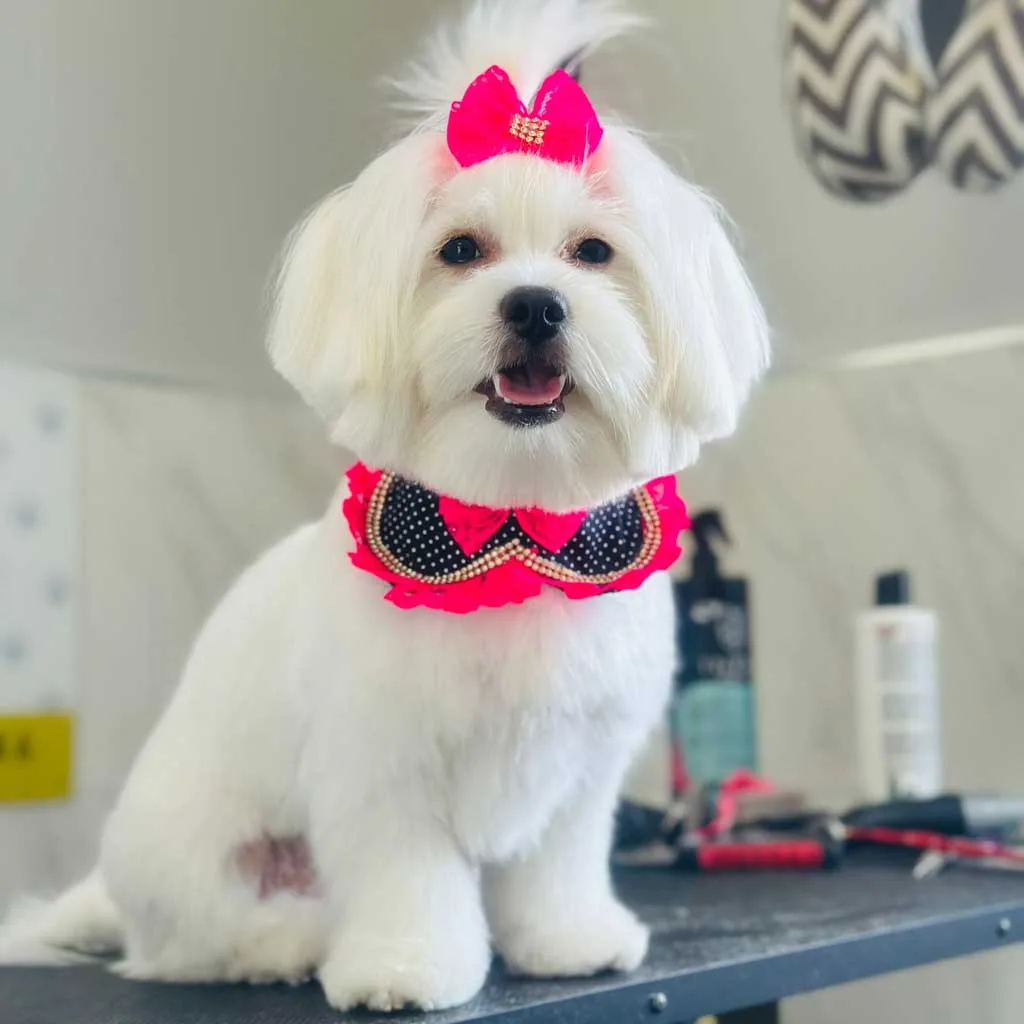
- Shih Tzu, Maltese, Yorkshire: long single coats trap heat and debris, and a puppy cut is a good August choice.
- Any dog with heavy matting: when mats are tight against the skin, a short clip is the humane option, not a cosmetic one.
- Sanitary and paw pad areas on every breed: these can always be trimmed short, even on double coats.
What we do instead at CatDog
For double-coated dogs in Lowell, Dracut, Chelmsford and the rest of Greater Lowell, our summer protocol is simple and it works: a de-shedding bath, a full high velocity blow-out to pull dead undercoat, a line brush, a sanitary trim, paw pad and ear cleaning, and nails. The dog leaves lighter, the coat breathes, and the natural sun barrier stays intact.
If you are not sure which category your dog falls into, send us the breed and a photo on WhatsApp and we will tell you honestly. Learn more in our guide to de-shedding treatments and our grooming styles by breed.
Signs your dog is overheating in a New England summer
- Heavy, frantic panting that does not slow down after a few minutes of rest.
- Thick, ropey drool, bright red gums or a very dry nose.
- Wobbling, weakness or refusing to walk on hot pavement.
- Vomiting or diarrhea after time outdoors. This is an emergency, call your vet.
A good rule for Lowell sidewalks in August: press the back of your hand to the pavement for seven seconds. If you cannot hold it, your dog cannot walk on it.
Book with CatDog Grooming Salon
Dog and cat grooming in Lowell, MA, rated 5.0 on Google. See our services or book an appointment. We serve you in English and Portuguese.
Book an appointmentKeep reading
- End-of-summer shedding: why dogs blow coat in August
- Summer skin allergies and hot spots in dogs
- Seasonal grooming tips for New England
Frequently asked questions
Is it ever okay to shave a Golden Retriever or Husky?
Only for medical reasons, such as severe matting, a skin condition or a surgical site. For heat alone, de-shedding is safer and more effective.
Will my dog's coat grow back the same after a shave?
On single-coated breeds, yes. On double-coated breeds it may grow back uneven, softer or patchy, and in some dogs it never fully returns to the original texture.
How short is safe for a Poodle in August?
We normally keep at least a half inch of coat on the body for sun protection, with shorter work on the belly, sanitary area and paws. Full skin exposure is not necessary to keep a Poodle cool.