
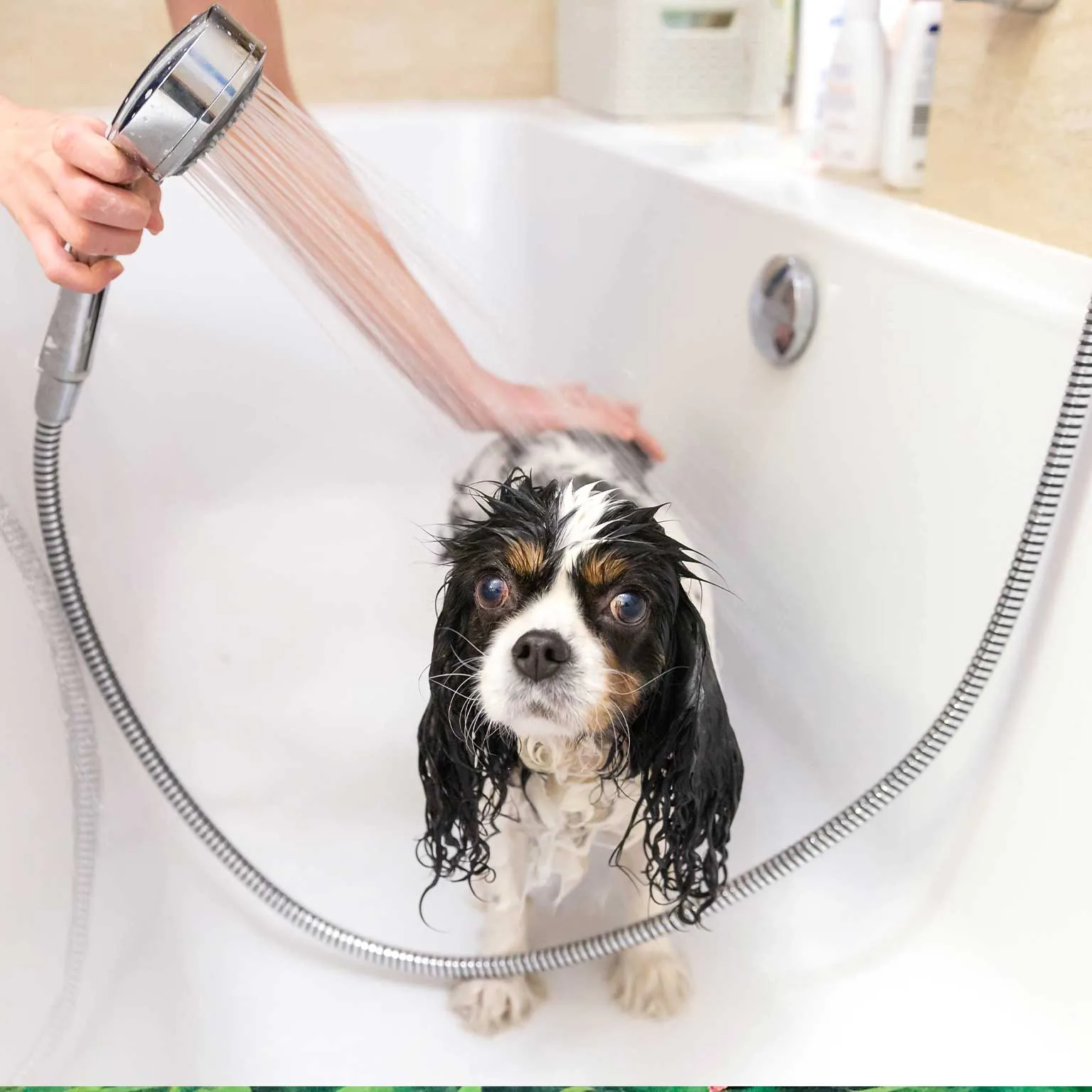
Why August is peak hot spot season here
Three things stack up at the same time in the Merrimack Valley: high humidity, peak grass and ragweed pollen, and dogs swimming or getting hosed off in the yard. A dog that goes into the water and is not dried down to the skin can develop a hot spot within hours, because warm moisture against the skin is exactly what bacteria need.
How to tell a hot spot from a normal irritation
- It appears suddenly and grows fast, often overnight.
- The skin is bright red, warm, wet and often has matted hair stuck to it.
- The dog licks, chews or scratches that one place obsessively.
- Common locations: cheeks and neck, the hips, the base of the tail, and behind the ears.
What grooming does to prevent them
- Full dry, every time. We blow the coat dry to the skin, not just the surface. This is the single biggest preventive step in summer.
- Mat removal. A mat is a damp, airless pocket against the skin. It is a hot spot waiting to happen.
- Gentle, pH correct shampoo. Human shampoo and harsh products strip the skin barrier and make allergies worse.
- Rinsing off allergens. A bath every two to four weeks in pollen season physically removes what is sitting on the coat and paws.
- Early detection. On the table we see the skin. Many owners first learn about a developing hot spot from us.
After the river, the pool or the sprinkler
If your dog swims in the Merrimack or plays in a sprinkler in Pawtucketville, do this before letting them nap: towel hard, then dry with air, paying attention to the armpits, groin, chest, ears and the area under the collar. Take the collar off until the neck is dry. Those are the spots owners skip and where hot spots start.
When to call the vet
Call the same day if the area is larger than a quarter, is oozing or bleeding, smells strong, or if your dog is in enough pain that they will not let you touch it. Hot spots usually need a clip around the area, cleaning and a prescription. We are happy to shave the area and clean it as part of the plan, but the medication has to come from your vet.
Book with CatDog Grooming Salon
Dog and cat grooming in Lowell, MA, rated 5.0 on Google. See our services or book an appointment. We serve you in English and Portuguese.
Book an appointmentKeep reading
Frequently asked questions
Can I treat a hot spot at home?
You can keep the area clean and dry and stop the licking with a cone, but most hot spots need a vet to clip, clean and prescribe treatment. Home remedies often trap moisture and make it worse.
Does a summer haircut help with allergies?
It can, because a shorter coat holds less pollen and dries faster. It works best combined with regular baths that rinse allergens off the skin and paws.
How often should an allergic dog be bathed in summer?
Many allergic dogs do well with a bath every one to two weeks during pollen season, using a gentle or medicated shampoo recommended by your vet.